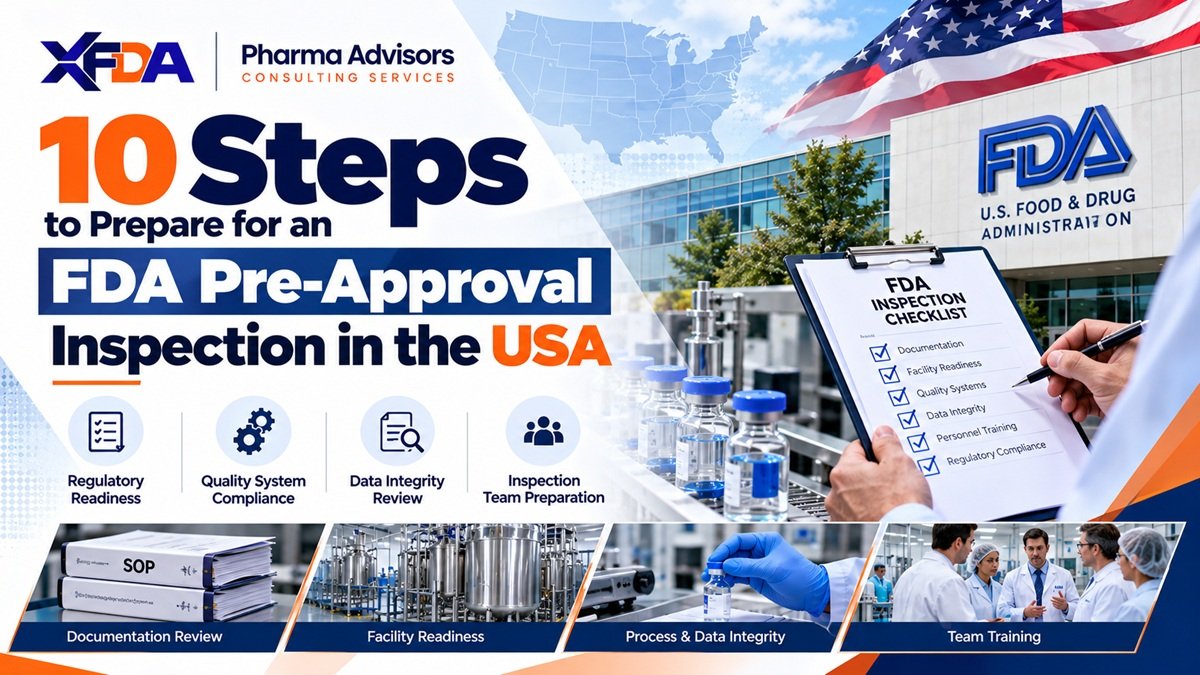
One missing log entry can hold up a whole batch from reaching the market. Most quality teams know this, but small gaps can still go unnoticed for months. Often, an outside inspector finds them first. By then, the cost of fixing the issue can be much higher.
A 2026 review found that data integrity issues were linked to about 60% of FDA warning letters issued to Indian sites.
The revised Schedule M now applies to drug makers across India. Inspectors will not wait for your team to feel ready. A GMP audit in India gives you a chance to look at your plant the way a regulator would. You can find gaps, fix them, and build clear proof that your systems are under control.
This guide covers what a GMP audit checks, why it matters, and when you should plan one. It also explains how XFDA Pharma Advisors can help Indian pharma makers prepare, find gaps, and get ready for inspection.
What a GMP Audit Actually Checks
A GMP audit is a detailed check of how your plant makes, tests, stores, and controls medicines. Auditors will compare your team’s daily activities with the GMP rules set by organizations including CDSCO, WHO, and the US FDA. What they check can vary based on your products, site, and target markets.
A typical pharmaceutical GMP audit looks closely at these areas:
- Quality system: Change controls, deviations, CAPA, and review records.
- Records: Batch records, SOPs, and data entries that need to be complete and accurate.
- Plant and equipment: Cleaning, repairs, calibration, and cleanroom controls.
- Production and lab: Process checks, test methods, and raw data records.
- Teammates: Training records, gowning, and defined job roles.
- Suppliers and storage: Vendor checks, warehouse conditions, and tracking of raw and pack materials.
Each area links to the next, so a weak SOP can create a weak batch record. Auditors also talk to floor operators, because their answers show how well staff follow written steps.
Why GMP Compliance Faces More Pressure in India Now
Regulators are asking more from Indian drug makers than they did a few years ago. India revised Schedule M in December 2023 to bring its GMP rules closer to WHO standards. Larger companies had to meet the new rules first, while MSMEs got more time until 31 December 2025. That deadline has now passed, so all units covered by Schedule M need to meet the revised rules.
The scale of this work is huge. India has about 10,500 pharma units, and around 8,500 are MSMEs. Many of these sites still need to improve their buildings, systems, equipment, and records to meet the new Schedule M requirements.
There is also more pressure from overseas regulators, especially for plants that export medicines. The FDA expanded unannounced inspections at foreign sites in May 2025. With a surprise visit, there is no time to fix records or clean up gaps at the last minute.
A GMP audit in India gives your team a chance to find those gaps before a regulator does.
How a GMP Audit Helps Pharma Companies in India
The benefits go beyond passing one inspection. For Indian pharma manufacturers, five benefits stand out. The benefits go beyond passing one inspection. For Indian pharma manufacturers, five benefits stand out.
It Finds Gaps Before Regulators Do
An in-house or third-party GMP audit in India provides a transparent picture of any potential issues. Auditors can follow a batch from raw material received to the final release and check for any breaches at the various stages. They may discover inconsistencies in the record, unclear steps, or a discrepancy between the steps in an SOP and what people do. The findings are typically categorized as critical, major, and/or minor. This assists your group to concentrate on the issues that require action at the initial level.
It Protects Data Integrity
Data integrity is still a major concern for Indian drug makers. The FDA in a warning letter to an Indian API manufacturer in 2025 discovered that some batches were produced without the corresponding raw test data. A GMP audit can check audit trails, user access, backup systems, and other controls before these issues become an inspection finding.
It Prepares You for FDA and WHO Inspections
A GMP audit can act as a practice run for a real inspection. Your team will have the opportunity to answer questions, locate records, and describe processes in a time-constrained environment. Good preparation can make a real difference. For example, Granules India’s Vizag site completed a 2023 US FDA GMP inspection with zero Form 483 observations.
It Supports Schedule M Compliance
The revised Schedule M brings Indian GMP rules closer to WHO standards. A gap analysis with the new requirements can reveal where to begin. This provides your team with a stronger foundation when planning upgrades, budgets, timelines, and training. Rather than attempting to fix everything, gaps can be addressed by applying a risk-based approach.
It Builds Buyer and Partner Trust
GMP compliance is also important when dealing with international buyers, contract partners, or licensing companies. Before entering into a contract with a supplier, many companies conduct a quality system review. That review will be easier if there is a good audit record. It provides transparency to the buyer about following a controlled process and being serious about quality.
Which Type of GMP Audit Do You Need?
Different audits serve different goals, so most companies combine several types in one yearly plan.
| Audit Type | Who Conducts It | Best Use |
| Internal | Your own QA team | Routine self-inspection |
| Third party | Independent experts | Fair gap checks and mock inspections |
| Supplier | Your customer or buyer | Vendor approval |
| Regulatory | CDSCO, state, FDA, or WHO | Licenses and market entry |
A third party GMP audit in India adds fresh eyes because internal teams often miss habits they see daily.
Common Findings in a GMP Audit in India
Audit reports from Indian pharma plants often show the same types of problems. The good news is that many of these gaps can be fixed with basic controls and better day-to-day checks.
Recent FDA warning letters have pointed to issues such as:
- Missing or false raw data: Lab and sterility test records did not always contain the full data needed to support test results.
- Weak review of failures: Deviations and failed batches were not properly checked before products were released.
- Poor plant and equipment care: Cleaning was not always effective, equipment was not properly maintained, and some production areas were not kept in good condition.
- Weak quality oversight: Quality teams sometimes failed to stop a batch from being released when key data was missing.
These problems may start small, but they can grow into serious compliance issues. A routine GMP audit can help find them early, while they are still easier and cheaper to fix.
What Skipping a GMP Audit Can Cost You
Skipped audits carry a real price, and the bill usually arrives during an inspection. FDA warning letters often give a company only 15 days to respond. That short window leaves little time to build a sound corrective plan.
Repeat problems cost a company even more than first offenses. In one recent letter, the FDA said a firm never fixed issues from an earlier import alert. Import alerts can block shipments to the US until the plant proves it has improved.
A yearly GMP audit in India costs far less than a recall or a lost export deal.
A Simple Roadmap for Your First GMP Audit
A clear plan makes a GMP audit easier to manage. It is also an effective way of keeping your team calm and focused as the audit begins.
- Set the scope: Decide which sites, products, and GMP standards you want to review.
- Compile documents: Compile key documents, including SOPs, batch records, validation files, training logs etc.
- Perform an audit: Auditors visit the plant, examine plant records, and interview plant personnel to observe work practices daily.
- Review the findings: Rate each finding based on its risk and assign someone to take care of it.
- Close the actions: Create a CAPA plan with clear dates and owners. Now verify that each fix has been effected as intended.
Conclusion
A GMP audit can be useful, as it will provide you with an indication of whether your compliance systems are effective in everyday working life or merely on paper. This is even more important for Indian pharma firms, since the regulatory expectation keeps changing all the time.
A proper audit can identify areas of weakness, prioritize risks, enhance systems, and prepare staff for inspections. It can also help protect product quality, customer trust, market access, and business continuity. It’s not about perfect paperwork. To create trustworthy processes that consistently go as planned and leave behind clear evidence.
If your site needs an independent review, XFDA Pharma Advisors can help. Contact XFDA Pharma Advisors for a practical GMP audit in India and an inspection readiness assessment.
FAQs
What is the purpose of a GMP audit?
A GMP audit helps you see if your plant is following the right quality practices. It also helps you spot small gaps before they turn into bigger problems during an inspection.
How often should a pharma company conduct a GMP audit?
Most pharma companies do an internal GMP audit at least once a year. But high-risk areas, processes, or suppliers may need to be checked more often.
Who conducts GMP audit in India?
CDSCO and state drug regulators inspect licensed pharma plants in India. Companies can also ask their own quality team or an outside GMP expert to carry out an audit.
What is the difference between a GMP audit and a GMP inspection?
A GMP audit is usually planned by the company to find and fix gaps. A GMP inspection is carried out by a regulator to check whether the plant meets the required rules.
Is GMP mandatory in India?
Yes. Drug makers in India must follow the GMP requirements under Schedule M. The revised Schedule M also applies to MSMEs, subject to the applicable requirements and timelines.