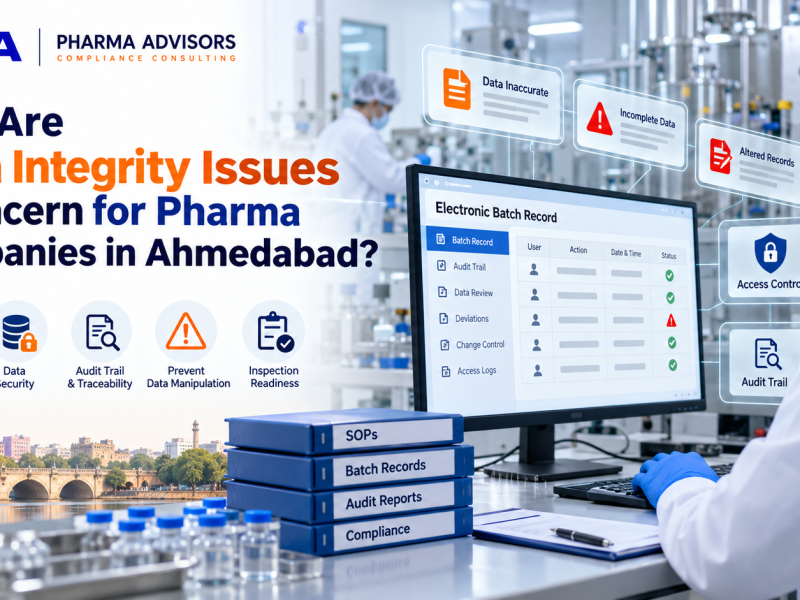
A single wrong number can put a plant at risk after years of work. Nowadays, regulators use data as evidence. They check it almost as closely as they check the medicine itself. Ahmedabad gets extra attention because it is home to many drug plants.
One weak audit trail, a shared password, or a changed test result can lead to an FDA warning letter. That can cause delays in approvals, prevent exports, and negatively impact buyer trust for years. Many pharma companies in Ahmedabad believe that their records are fine till the inspector calls for them.
This guide discusses the reasons why data integrity problems persist, the costs they can cause, and how to address them before they occur. You will notice actual cases from the region and the common causes of those problems. You will also receive a basic checklist that your quality team can use this week. This guide will help you identify gaps before an inspection if yours is scheduled for a soon date.
Why Pharma Companies in Ahmedabad Face Extra Scrutiny
One of the reasons for high pressure in Ahmedabad is its size. Gujarat makes about 30% of India’s medicines and 28% of its pharma exports. More than eight of India’s largest drug firms have plants in Ahmedabad. Many of them ship medicines to the US and Europe.
That means more FDA checks. When inspectors visit, they scrutinize the records for each batch, test, and result. The city is rapidly expanding and exacerbating the risk. Gujarat approved 183 new drug plants in the 2024–25 financial year. Often, new plant hires staff fast, but new teams take time to learn the rules for making and keeping records.
Some units also move from other parts of North India. The more time it takes to change a site, team, or system, the greater the likelihood of error. Growth brings more work, more people, and more systems to manage. In such a climate, any inconsistencies in data creation, validation, or storage can escalate into larger issues.
What Past FDA Cases Reveal
Real-life examples illustrate the problems that can arise and the potential losses that can result from small gaps in the records.
- The FDA issued a warning letter to Cadila’s Ahmedabad facility for inadequate controls to safeguard test data.
- The FDA sent a warning letter to Intas Pharmaceuticals for altering its defect counts in inspection records as part of its 2023 inspection.
- The FDA also placed the Ahmedabad facility on its import alert list.
An import alert allows the FDA to hold products without a physical check. This can stop shipments and cut sales for the products involved. Data Integrity problems have resulted in FDA warning letters, import alerts, and consent decrees, according to the FDA.
These cases are not just isolated incidents. They reveal a larger issue: If data controls are not strong, there are small shortcuts that become a part of one’s work. Those shortcuts can impact records throughout the site and may be apparent during inspection. If the FDA is not satisfied with one record, it may be more difficult to gain trust in other records from the same site. That’s why data integrity is more than just a quality concern. It may turn into an actual business threat.
Where Data Integrity Gaps Hide Inside a Plant
Data issues do not usually stem from any one source. Individual departments must have their own measures to detect problems early.
Quality Control Lab
QC labs generate a significant portion of a plant’s information and require tight control. Test results are stored on lab tools like balances and dissolution testers and require protection. In one FDA warning letter, inspectors found lab data stored on computers where it could be deleted. The risk is not just lost data. A lab that cannot maintain a record of the change or removal of a result may be unable to establish that its results are complete and reliable.
Production Floor
Production teams work with batch records, line clearance forms, and equipment logs. Documents can lose credibility if they are late, a copy, or backdated without being noticed. Visual inspection is one good example. In the Intas case, FDA discovered that counts of defects were altered in inspection records. This illustrates how basic production records require robust measures of control.
Quality Assurance
CGMP data must be reviewed by the quality unit before a batch is released, including unusual results when compared to other results. A result should never be removed just because it does not fit the expected outcome. Absence of a result should be clearly and authoritatively explained. If this record is not there, even the correct test can cause questions regarding the data integrity of the site. Real cases show how small record gaps can turn into major business losses.
Why Do These Gaps Keep Appearing?
The same problems show up again and again in inspection findings and industry surveys. An EY survey of Indian pharma companies found that a lack of staff trained in GMP was a key issue. Pressure to meet production targets and shipping deadlines was another.
- Once you know what to look for, many other gaps are easy to spot:
- It is difficult to determine who made a change and when with shared logins.
- Audit trails may be built into the software, but no one checks them on a set schedule.
- Lab instruments can be linked to individual computers, and raw data can be erased.
Fixing one system without fixing behavior is a common mistake. New software cannot stop a manager from asking staff to hit a target regardless of accuracy. Culture and technical controls must improve together for results to last.
What the FDA Expects, in Plain Terms
The FDA trusts data only when it is complete, consistent, and accurate. Its 2018 guidance on data integrity and CGMP followed a rise in findings from inspections. Many teams use the ALCOA principles to check their own records. Use this table as a quick test during internal reviews.
| ALCOA Principle | What it means | Simple check |
| Attributable | The record shows who performed the work or made the entry. | Can you tell who made the entry? |
| Legible | The record is clear and can be read and understood. | Can someone else read and understand it? |
| Contemporaneous | The entry is made when the work is done. | Was it recorded at the right time? |
| Original | The original record or source data is kept and protected. | Can you still access the original data? |
| Accurate | The record correctly reflects what happened. | Does the record match the source data or instrument result? |
The Business Cost of Ignoring Data Integrity
A data integrity issue can quickly become more than a problem for the quality team. If the regulators don’t believe that the data behind the product are valid, they can withhold approval until the problem is solved. Some companies may also pause shipments to the US while they investigate and correct the problem. Then customers and business partners can request further audits or additional evidence of data reliability. Rebuilding that trust can take time.
The impact can also go beyond one product. In the GVK Biosciences case, concerns over clinical trial data led European regulators to suspend around 700 medicines linked to the affected studies. The case shows how a data problem can spread across several products and markets, making it a much bigger business issue than it first appears.
A Practical Plan for Pharma Companies in Ahmedabad
You do not need a huge budget to start reducing data integrity risks. Start with the areas that carry the most risk, such as the QC lab, and then move to production, warehouse, and supplier records. Even a small team can work through one area at a time.
- Map GMP data: List every system that creates or stores GMP data, from lab balances to cloud software.
- Check user access: Give each person a unique login and remove unnecessary delete or edit rights.
- Review audit trails: Check audit trails on a set schedule and document what you find.
- Train staff: Use real inspection findings to show why accurate records matter.
- Strengthen investigations: Make sure every deviation has a clear, documented root cause.
- Run mock inspections: Let staff practise finding records and answering questions about their data.
Leadership support is just as important. Staff tend to follow what managers value and reward, so data integrity has to be a priority from the top.
Conclusion
Data integrity is not just about avoiding a warning during an inspection. It is about being able to show that your quality decisions are based on records you can trust.
For pharma companies in Ahmedabad, this matters at every stage, from the QC lab and production floor to QA and management review. Whether you supply the Indian market or export to regulated markets, your data needs to hold up in day-to-day work as well as during an inspection.
The best time to find a data integrity gap is before an inspector does. If you want an independent data integrity assessment, mock audit, or FDA inspection readiness review, XFDA Pharma Advisors can help your team find the gaps and work out what needs to be fixed.
FAQs
What is data integrity in the drug industry, and why does it matter?
Data integrity means keeping records complete, accurate, and reliable from the time they are created. The records are inspected by regulators to ensure a batch is made and tested correctly.
What are the ALCOA principles used to check records?
ALCOA is a mnemonic for Attributable, Legible, Contemporaneous, Original, and Accurate. These principles are used by pharma teams to verify who made a record, when, if there is any original data, and if it is correct.
What are the most common data integrity violations in pharma?
Common problems include sharing logins, loss of raw data, inadequate audit trail reviews, and alterations to test results without documentation. Late entries and weak investigations can also raise concerns during inspections.
Why do data integrity issues lead to FDA warning letters?
The FDA relies on company data to assess product quality. Inspectors are likely to examine the controls at the site if there are no records, altered records, or records that are not found in the original work. Repeated or serious problems result in warning letters and additional regulation.